We can't find the internet
Attempting to reconnect
Something went wrong!
Hang in there while we get back on track

Experienced Boaters
Make Better Brokers.
Call us today and see for yourself.

When to List or Buy in Southwest Florida: How Seasonality Shapes Your Leverage
In Southwest Florida, timing your yacht purchase or sale is not just about convenience—it materially affects selection, days on market, negotiation leverage, and logistics. Cape Coral, Fort Myers, Naples, Marco Island, Sanibel, Captiva, Punta Gorda, and Charlotte Harbor all share the same broad seasonal patterns, but the right move for you depends on your goals.
Below is a candid framework we use at Norwood & Skiff Yacht Group when advising serious buyers and sellers.
The Four Key Seasonal Forces in Southwest Florida
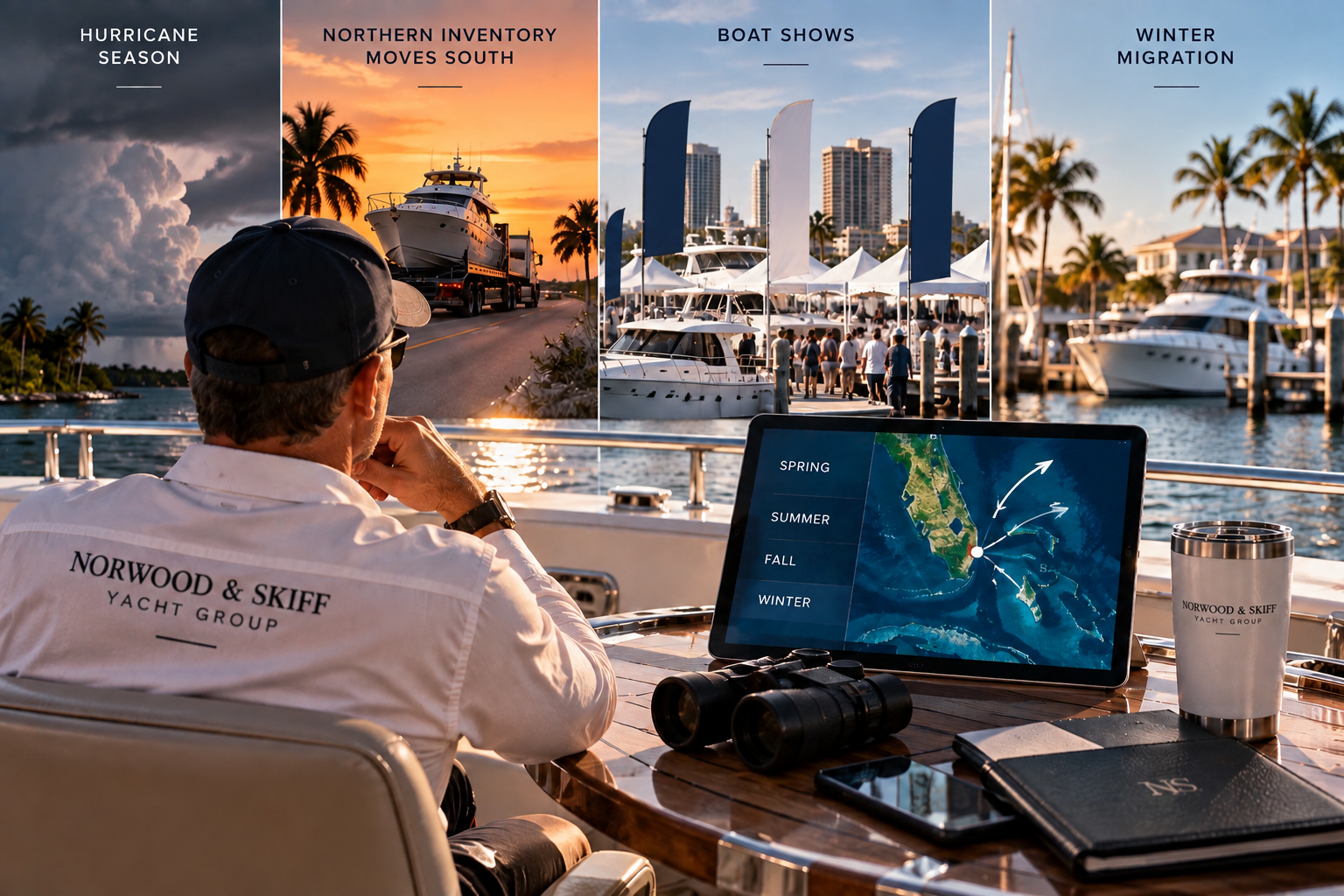
Yacht availability, pricing pressure, and transaction pace tend to follow four main cycles:
- Winter migration (Jan–April) – peak buyer demand
- Boat show periods (primarily Jan–March, plus fall shows) – concentrated activity and visibility
- Hurricane season (Jun–Nov, with peak Aug–Oct) – risk, insurance, and logistics
- Northern inventory moving south (fall) – increased selection and repositioned yachts
Understanding how these overlap is the foundation for smart market timing.
Winter Migration: Peak Demand and Faster Sales
From January through March, Southwest Florida fills with seasonal residents and visiting buyers. This has real market consequences:
- More qualified buyers physically in Florida
- Higher showing activity and shorter days on market
- Less negotiating room on well-positioned yachts
For Sellers
Winter is usually your best window for maximum exposure:
-
Properly priced yachts with strong presentation can receive:
- More showings in a shorter period
- Faster offers from motivated buyers
-
Good listings stand out when:
- Pricing is tied to current comparable sales
- Condition and service history are well documented
- Photography, video, and descriptions are professionally executed
Sellers who come to market late in season (March–April) may still benefit from demand, but the urgency begins to taper.
For Buyers
Winter can still be a good time to buy—if you’re prepared:
- Expect fewer “distressed” pricing opportunities on clean, late-model, well-maintained yachts.
-
The best-positioned inventory often moves quickly, so:
- Have financing, insurance guidance, and dockage plan in motion early.
- Be ready to act once survey, sea trial, and due diligence check out.
-
A strong buyer’s broker can help you:
- Identify which yachts are realistically priced versus aspirational
- Move efficiently from offer to contract to closing, without skipping critical protections
If your priority is selection and avoiding “missing the boat,” winter is highly productive. If your priority is pushing hard on price, other seasons can be more favorable.
Boat Shows: Visibility, Urgency, and Compressed Timelines
Major Florida boat shows—Miami, Fort Lauderdale, Palm Beach, and regional shows—concentrate attention and decision-making, especially January–March and in the fall.
For Sellers
Boat show periods can be ideal if you’re prepared in advance:
-
Buyers who visit Southwest Florida before or after major shows are often:
- Actively comparing brands and models
- Educated on asking prices and equipment
- Ready to write offers if they see value
To leverage this:
-
List before peak show windows, not during:
- Have your photography, video, and listing live and polished.
- Ensure basic service is up to date to avoid show-stoppers during survey.
-
Work with a broker who can:
- Connect show traffic to your yacht
- Position your asking price credibly against new and late-model alternatives
For Buyers
Boat show periods create:
- Strong comparison shopping across builders and models
-
A chance to evaluate:
- New vs. late-model used vs. older, well-maintained yachts
- Features that matter for Southwest Florida waters (draft, air draft, bridge clearance, access to open water)
With a buyer’s broker:
-
Use shows to narrow down what fits your real intended use:
- Great Loop yacht vs. Bahamas-capable cruiser
- Shallow draft family boat vs. larger motor yacht for long-range cruising
- Then focus on evidence-based valuation and condition of actual used yachts in Cape Coral, Fort Myers, Naples, Marco Island, Punta Gorda, and surrounding areas.
Hurricane Season: Risk, Insurance, and Negotiation Room
Hurricane season runs June through November, with peak activity August–October. This period affects buyer psychology, insurance, and logistics.
For Sellers
Listing in hurricane season can feel counterintuitive, but it can work—if you understand the tradeoffs:
- There are fewer casual buyers in the region.
-
Qualified buyers who are active may:
- Expect more negotiating room
- Move deliberately, with a careful view of risk and condition
Key considerations:
- Ensure your hurricane plan, dockage, and insurance are clear and documented.
-
Be prepared for buyers to scrutinize:
- Past storm history
- Structural and mechanical inspections
- Moisture readings and hull condition during survey
If your goal is top-of-market pricing, hurricane season is rarely ideal. If your priority is to sell within a specific timeframe and you’re realistic on price, it can still be productive.
For Buyers
Hurricane season can present opportunities if you’re willing to take a disciplined approach:
-
Some sellers become more motivated:
- Carrying costs, storm risk, and upcoming winter decisions can push negotiations.
-
You may benefit from:
- Less competition from other buyers
- More time for thorough due diligence, including deeper technical evaluations
However, you must factor in:
- Insurance limitations or storm-exclusion windows
- Haul-out and storage logistics
- Condition concerns if a storm impacts the area mid-transaction
This is where a captain-broker or technically experienced broker becomes valuable—someone who can evaluate storm-related risk, not just negotiate paperwork.
Fall: When Northern Inventory Moves South
In the fall months (typically October–December), many yachts reposition from northern states to Florida. This matters for both selection and pricing.
For Sellers
If your yacht is already in Southwest Florida:
- You may face more competing inventory as northern boats arrive.
-
On the other hand, a well-priced yacht with:
- Documented maintenance,
- Proven Southwest Florida suitability (draft, air draft, canal access),
- Strong presentation can attract buyers who want to buy and settle in before peak season.
Listing in early fall can capture:
- Buyers planning for the upcoming winter
- Owners starting Great Loop planning or Bahamas cruising preparation
For Buyers
Fall often offers:
- Broader selection as more yachts arrive from the Northeast and Great Lakes
-
Sellers who are:
- Ready to be out before the new season
- Open to realistic, evidence-based offers backed by surveys and comparables
This is a smart time to:
-
Conduct full due diligence before peak winter pressure:
- Surveys, sea trials, insurance review, marina selection, and hurricane planning.
- Position yourself to enjoy the yacht through the winter rather than shopping during it.
How to Choose the Right Timing for Your Situation
There is no single “best” month to buy or sell in Southwest Florida. There are better times for your goals:
-
If you’re a seller prioritizing exposure and faster sale:
- List: Late fall through winter (Nov–March)
-
If you’re a buyer prioritizing choice and leverage:
- Focus: Late summer through fall (Aug–Dec) and parts of hurricane season, with careful risk management
-
If you need to manage logistics, storm risk, and dockage:
- Plan well ahead of June–November, especially for larger yachts and more complex systems
Whatever your timing, the key is not just representation—it’s judgment:
- Interpreting comparable sales, not just asking prices
- Understanding condition and service history, not just model and year
- Factoring ownership costs, insurance, dockage, and regional suitability
- Knowing when to recommend proceeding—and when to recommend walking away
Considering a Purchase or Sale in Southwest Florida?
If you’re thinking about listing your yacht or buying in Cape Coral, Fort Myers, Naples, Marco Island, Punta Gorda, or surrounding areas, Norwood & Skiff can help you choose the right timing and strategy for your situation.
Connect with a Norwood & Skiff broker to discuss market timing, realistic valuation, and a plan tailored to how you actually intend to use—or exit—your yacht.