We can't find the internet
Attempting to reconnect
Something went wrong!
Hang in there while we get back on track

Experienced Boaters
Make Better Brokers.
Call us today and see for yourself.

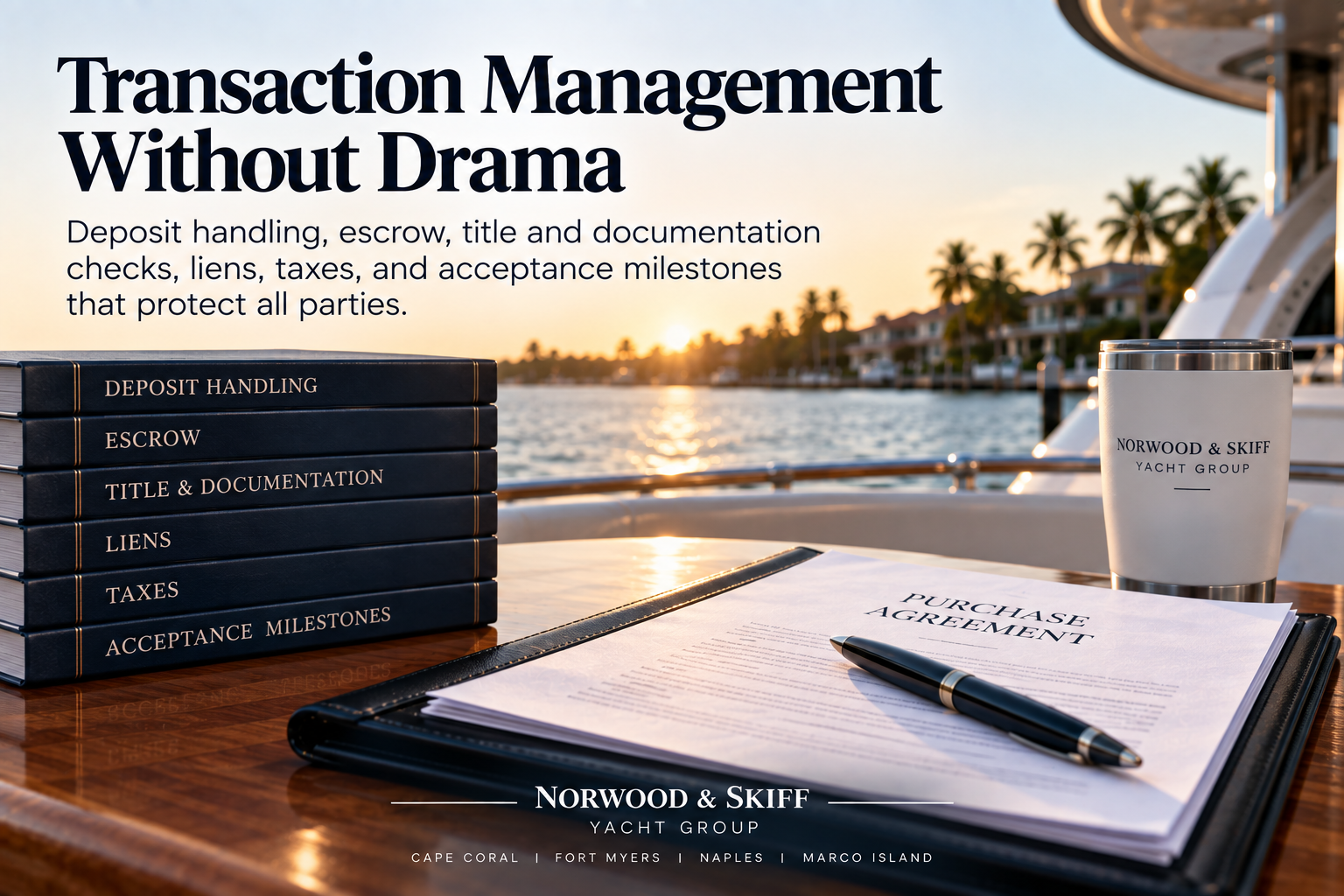
Transaction Management Without Drama: How Smart Process Protects Your Yacht Deal
Buying or selling a yacht in Southwest Florida should be exciting, not stressful. Yet many deals go sideways not because of bad boats, but because of poor transaction management—unclear deposits, sloppy escrow, rushed title checks, and vague acceptance milestones.
At Norwood & Skiff Yacht Group, we treat the transaction itself as seriously as the yacht. Below is how a disciplined process protects both buyers and sellers from avoidable problems.
1. Deposits: Serious Intent, Not Risky Exposure
In yacht brokerage, a deposit is the buyer’s good‑faith money, typically 10% of the agreed price, held while due diligence, survey, and sea trial take place.
A well-structured deposit arrangement should:
- Be held in a neutral, regulated escrow account (not in someone’s personal account)
- Be clearly governed by a written purchase and sale agreement
- Spell out exactly under what conditions the deposit is refundable or non‑refundable
- Define deadlines for survey, sea trial, and acceptance decisions
For buyers, this avoids the fear of “my money disappeared.”
For sellers, it ensures only serious, qualified buyers tie up their yacht.
Norwood & Skiff brokers walk clients through deposit terms line by line so there are no surprises about when a deposit may be returned, applied to the purchase, or forfeited.
2. Escrow: Neutral Ground for Your Money
Escrow is the secure holding of funds by a neutral party until contract conditions are met. In a well-managed yacht transaction:
- The brokerage or closing agent maintains a dedicated escrow/trust account
- All deposits and purchase funds flow through that account
- Clear written instructions control when and why funds move
This structure protects:
- Buyers from paying a seller directly before clear title and documentation checks are complete
- Sellers from handing over keys and documents before purchase funds are truly cleared
Disciplined escrow handling helps ensure no one feels pressured to take a leap of faith based on promises.
3. Title and Documentation: Confirming Who Really Owns the Yacht
Before any closing, you need to verify that the person selling the yacht actually owns it and has the right to sell it.
A proper title and documentation check typically includes:
- Confirming current registration or documentation (U.S. Coast Guard or foreign flag, as applicable)
- Matching hull identification numbers (HIN) and official numbers to the vessel and the paperwork
- Verifying the ownership chain and ensuring any co‑owners or entities are properly documented
- Confirming the authority of any company officers or trustees signing on behalf of an entity
In Florida, failure to catch title issues early can delay closing or sink a deal late in the process. Norwood & Skiff coordinates with documentation and closing professionals so title checks run in parallel with survey and sea trial, not as an afterthought.
4. Liens and Encumbrances: Making Sure You’re Not Buying Someone Else’s Debt
Yachts, especially in active boating regions like Cape Coral, Fort Myers, Naples, and Marco Island, often have a history: loans, refits, yard work, storage, and insurance claims. Any of these can create liens—legal claims against the vessel.
Thorough lien and encumbrance checks should:
- Search for recorded mortgages and maritime liens
- Confirm lender payoff amounts and written payoff instructions
- Address any outstanding yard, storage, or mechanic’s bills that could cloud title
- Require proper releases and satisfactions at or before closing
The goal is simple: a buyer should receive the yacht free and clear, and a seller should fully satisfy valid obligations without unexpected costs or disputes.
5. Taxes and Fees: Planning Before You Close
Tax rules vary by state, vessel use, and ownership structure. While your broker is not your tax advisor, an experienced Southwest Florida yacht broker should at least help you ask the right questions early.
Considerations often include:
- State sales or use tax on the purchase
- Possible exemptions or caps that may apply
- Registration and documentation fees
- Local marina, dockage, and registration costs once the yacht is based in Cape Coral, Fort Myers, Naples, Punta Gorda, or surrounding waters
- How timing (moving a boat into or out of Florida) may affect tax exposure
Waiting until the week of closing to think about taxes can create last‑minute pressure. Norwood & Skiff encourages clients to coordinate with their tax and legal professionals well before they sign, and we help make sure the transaction timeline respects those plans.
6. Acceptance Milestones: Your Roadmap from Offer to Closing
Successful yacht transactions follow a disciplined sequence of milestones, each with clear deadlines and contingencies. A typical structure:
-
Offer and Contract Execution
Price, deposit, timing, and contingencies are agreed in writing. -
Due Diligence Period
- Review of service records and maintenance history
- Review of ownership, documentation, and known disclosures
-
Survey and Sea Trial
- Hull and systems inspection by an independent marine surveyor
- Sea trial to evaluate performance, engines, pods, stabilizers, and onboard systems
-
Post‑Survey Negotiation
- Review of survey findings and repair estimates
- Possible price adjustment requests, repair agreements, or decision to walk away
-
Formal Acceptance or Rejection
- Buyer issues a written “acceptance” or “rejection” of the vessel
- If rejected within the agreed conditions, the deposit is typically refundable
- If accepted, the deposit usually becomes non‑refundable subject to clear, remaining contingencies
-
Closing Preparation
- Final lien payoffs and releases
- Closing statement, funds to escrow, and document signing
- Transfer of title/documentation and handover
These acceptance milestones keep the deal on track, define when each party must act, and reduce emotion-driven decisions. Everyone knows the next step and the consequence of missing a deadline.
7. Clear Contingencies: How You Protect Yourself When Things Go Wrong
A contingency is a condition that must be satisfied for the transaction to proceed—for example, “subject to satisfactory survey” or “subject to clear title.”
Well‑crafted contingencies:
- Give buyers a structured way to back out if survey or sea trial reveal serious issues
- Protect sellers by requiring buyers to act within specific time frames
- Tie the treatment of the deposit to objective events (survey results, acceptance notifications, financing approval)
This is where disciplined transaction management matters most. Ambiguous language like “subject to buyer’s satisfaction” without deadlines or definitions can create conflict later. Norwood & Skiff focuses on specific, measurable contingencies that protect both parties and minimize arguments.
8. Why Experienced Judgment Matters More Than Paperwork
Contracts, escrow accounts, and checklists are necessary, but they are not enough on their own. The real protection comes from judgment—knowing when:
- A title or lien issue is solvable and when it signals deeper problems
- A survey finding is manageable wear and tear, or a reason to walk away
- Contingencies are being used reasonably versus as leverage in bad faith
- A closing timetable is realistic given documentation, financing, and travel logistics
Our team’s background as captains, yacht managers, mechanics, and service professionals means we evaluate both the yacht and the transaction with the same critical eye. The objective is not to “save” every deal—it is to help you make sound, risk‑adjusted decisions about whether to proceed at each step.
If you’re considering buying or selling a yacht in Cape Coral, Fort Myers, Naples, Marco Island, Punta Gorda, or the broader Southwest Florida market, our brokers can walk you through a disciplined, low‑drama process from first conversation to closing.
Contact Norwood & Skiff Yacht Group today to discuss your plans and how experienced transaction management can protect your next yacht decision.