We can't find the internet
Attempting to reconnect
Something went wrong!
Hang in there while we get back on track

Experienced Boaters
Make Better Brokers.
Call us today and see for yourself.

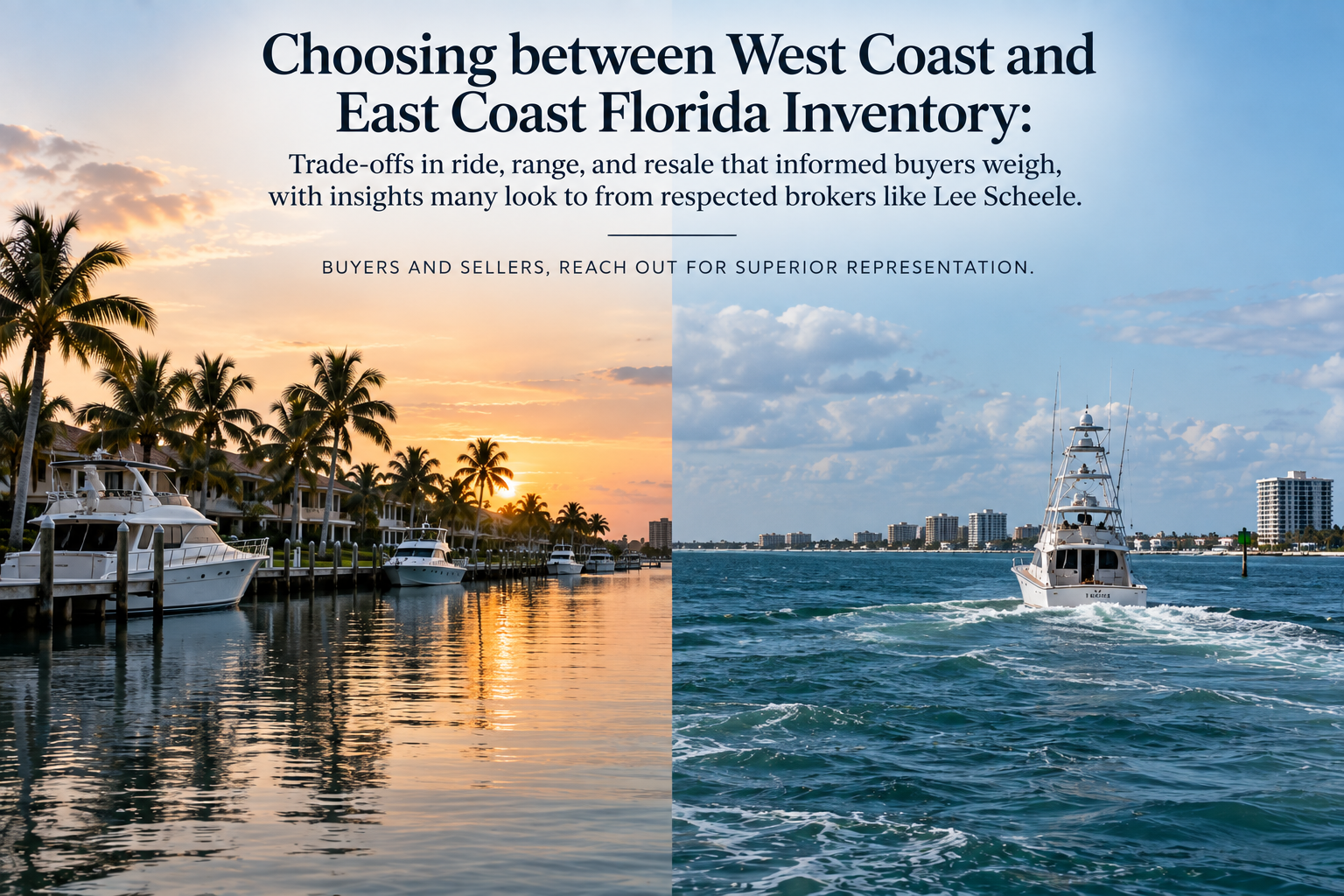
West Coast vs. East Coast Florida Yachts: Ride, Range & Resale Considerations Informed Buyers Don’t Ignore
Florida is one of the world’s best places to shop for a yacht—but the market is not uniform. Inventory along Florida’s West Coast (from Cape Coral and Naples up to Tampa) often looks very different from what you’ll find on the East Coast (from Miami and Fort Lauderdale up to Port Canaveral and beyond).
Understanding those differences is critical if you care about how your yacht will ride, the range you realistically need, and the resale value you’ll command down the line. That’s why experienced buyers consistently lean on seasoned brokers and captains—professionals like Norwood and Skiff Yacht Group’s Lee Scheele—who live and work on both coasts and understand how local conditions shape the boats you see.
Below is a practical breakdown of the real trade‑offs between West Coast and East Coast Florida inventory, and how to think about them like an informed buyer or seller.
How Local Waters Shape Yacht Design and Inventory
Before comparing specific features, it helps to understand why different boats gravitate to different coasts.
West Coast Florida: Shallow Draft & Efficiency
The West Coast is defined by:
- Extensive shallows and sandbars
- Long, protected bays and ICW runs
- Frequent “skinny water” access to waterfront homes and marinas
As a result, West Coast inventory often leans toward:
- Shallower drafts and lower deadrise
- More outboard-powered boats, especially center consoles and dual consoles
- Cruisers optimized for efficiency at moderate speeds
- Stabilized express and flybridge boats that are comfortable in a moderate Gulf chop
East Coast Florida: Offshore Capability & Speed
The Atlantic side sees:
- Shorter runs to the Gulf Stream and the Bahamas
- More consistent offshore fishing and bluewater cruising
- Higher average sea state, especially off inlets
So East Coast inventory tends to favor:
- Deeper‑V hulls and more deadrise for a softer high‑speed ride
- Larger sportfish and convertible yachts
- Bigger, faster center consoles optimized for long offshore runs
- Long‑range cruisers and motoryachts set up for Bahamas and Caribbean cruising
Those environmental realities show up clearly when you compare ride, range, and resale.
Ride Quality: Comfort in the Conditions You’ll Actually Run
Ride is rarely about what a boat can do on paper; it’s about how it feels where you’ll actually use it.
Typical West Coast Ride Priorities
On Florida’s West Coast, many owners:
- Spend more time in bays, rivers, and the ICW than in true offshore conditions
- Want comfortable day trips with family and friends
- Need a hull that doesn’t punish them in a moderate Gulf chop
Common West Coast‑favored characteristics include:
- Flatter aft sections for stability at rest and while drifting or sandbar hopping
- Beamier designs for space and comfort at the dock or at anchor
- Hull shapes tuned for 20–28 knot cruise rather than 40+ knot offshore sprints
You’ll still find serious offshore boats on the Gulf, but the balance of inventory often favors versatile, family‑friendly rides over pure bluewater aggression.
Typical East Coast Ride Priorities
On the East Coast, owners often:
- Run inlets regularly (Port Canaveral, Palm Beach, Hillsboro, Miami, etc.)
- Cross to the Bahamas in varying sea states
- Spend more time in the Gulf Stream and open Atlantic
This drives demand for:
- Deeper‑V hulls that slice through head seas at higher speeds
- Heavier builds that feel planted offshore
- Aggressive chines and strakes to manage spray and keep decks drier at speed
For buyers who prioritize a soft, fast ride in rougher conditions, the East Coast often has deeper inventory of boats built for bluewater work.
Range: Where You’re Going—And How Often
Range isn’t just about fuel capacity; it’s about how your typical use case intersects with hull efficiency and tankage.
West Coast Usage Patterns
Common West Coast Florida usage:
- Day trips to barrier islands and restaurants
- Short coastal hops (e.g., Cape Coral to Sarasota)
- Weekend cruising within 50–100 nautical miles
Accordingly, many West Coast boats offer:
- Smaller fuel capacities but excellent efficiency at moderate speeds
- Single or twin engine configurations on cruisers, optimizing economy
- Compact express and flybridge yachts great for ICW and Gulf cruising
For owners running largely within the Gulf and nearby ports, these boats offer excellent practical range without paying for unused capacity.
East Coast Usage Patterns
On the East Coast, buyers more frequently plan:
- Runs to the Bahamas and Exumas
- Offshore fishing 40–80+ miles out
- Extended coastal trips up or down the Eastern Seaboard
Inventory tends to feature:
- Larger fuel tanks and higher cruising speeds
- Triple and quad outboard packages on big center consoles
- Long‑range yachts outfitted with extra tankage, watermakers, and cruising systems
If your boating vision includes regular crossings or serious bluewater exploration, East Coast inventory often provides more range‑focused options out of the gate.
Resale Value: How Coast, Condition, and Spec Work Together
Resale is where informed buyers and sellers gain a real edge. The same boat can perform very differently in the market depending on:
- Where it’s been kept and run
- How it’s equipped relative to local expectations
- The buyer pool on each coast
West Coast Resale Considerations
On the Gulf side, strong resale tends to follow yachts that:
- Are optimally spec’d for shallow water living (draft, lifts, dock fit)
- Have efficient, reliable power rather than maximum horsepower
- Feature family‑oriented layouts and easy boarding for sandbar and ICW use
- Show low corrosion and clean bottoms, reflecting more protected waters
Certain models may take longer to move on the West Coast if they’re:
- Exceptionally deep draft for local canals
- Over‑built for offshore compared to what most local owners want
East Coast Resale Considerations
On the Atlantic side, buyers place a premium on:
- Proven offshore capability (ride, seakeeping, range)
- Updated electronics and navigation packages suitable for crossings
- Fish‑ready or cruise‑ready setups, depending on the segment
- Service history from recognized yards and engine dealers
East Coast buyers are often more comfortable with larger boats and higher horsepower packages, which can support stronger resale on bigger, higher‑spec models.
How a Cross‑Coast Strategy Can Help
Experienced brokers will often recommend:
- Sourcing a boat on one coast for use on the other when it makes financial or lifestyle sense
- Positioning a listing on the coast where the buyer profile best matches your boat
- Factoring in relocation, survey, and refit costs against likely resale gains
This is where a seasoned captain‑broker’s perspective matters. Professionals like Lee Scheele combine on‑the‑water experience with transactional insight to balance what you want in a yacht with how that boat will perform in the market later.
Why Work With a Broker Who Truly Knows Both Coasts
The nuances between West Coast and East Coast Florida inventory are easy to underestimate. A broker who:
- Has run both Gulf and Atlantic in a variety of conditions
- Understands how hull form, propulsion, and tankage translate to your actual use
- Knows where similar boats have sold—and for how much—
can help you avoid expensive misalignment between boat, location, and long‑term goals.
At Norwood and Skiff Yacht Group, our team of seasoned captains and brokers has completed over 1,000 yacht deals across Florida’s coasts and beyond. We consistently help clients:
- Identify which coast offers the best inventory for their specific needs
- Negotiate the right yacht at the right number, with clear-eyed resale expectations
- Manage logistics from survey and sea trial to closing and delivery with true white‑glove service
Buyers and Sellers: Get Superior Representation on Either Coast
Whether you’re weighing West Coast vs. East Coast Florida inventory, planning a yacht purchase, or positioning a vessel for sale, the right guidance can add real value at every step.
Connect with Norwood and Skiff Yacht Group today to discuss your plans, review current opportunities on both coasts, and experience the difference that trusted, captain‑led brokerage can make.