We can't find the internet
Attempting to reconnect
Something went wrong!
Hang in there while we get back on track

Experienced Boaters
Make Better Brokers.
Call us today and see for yourself.

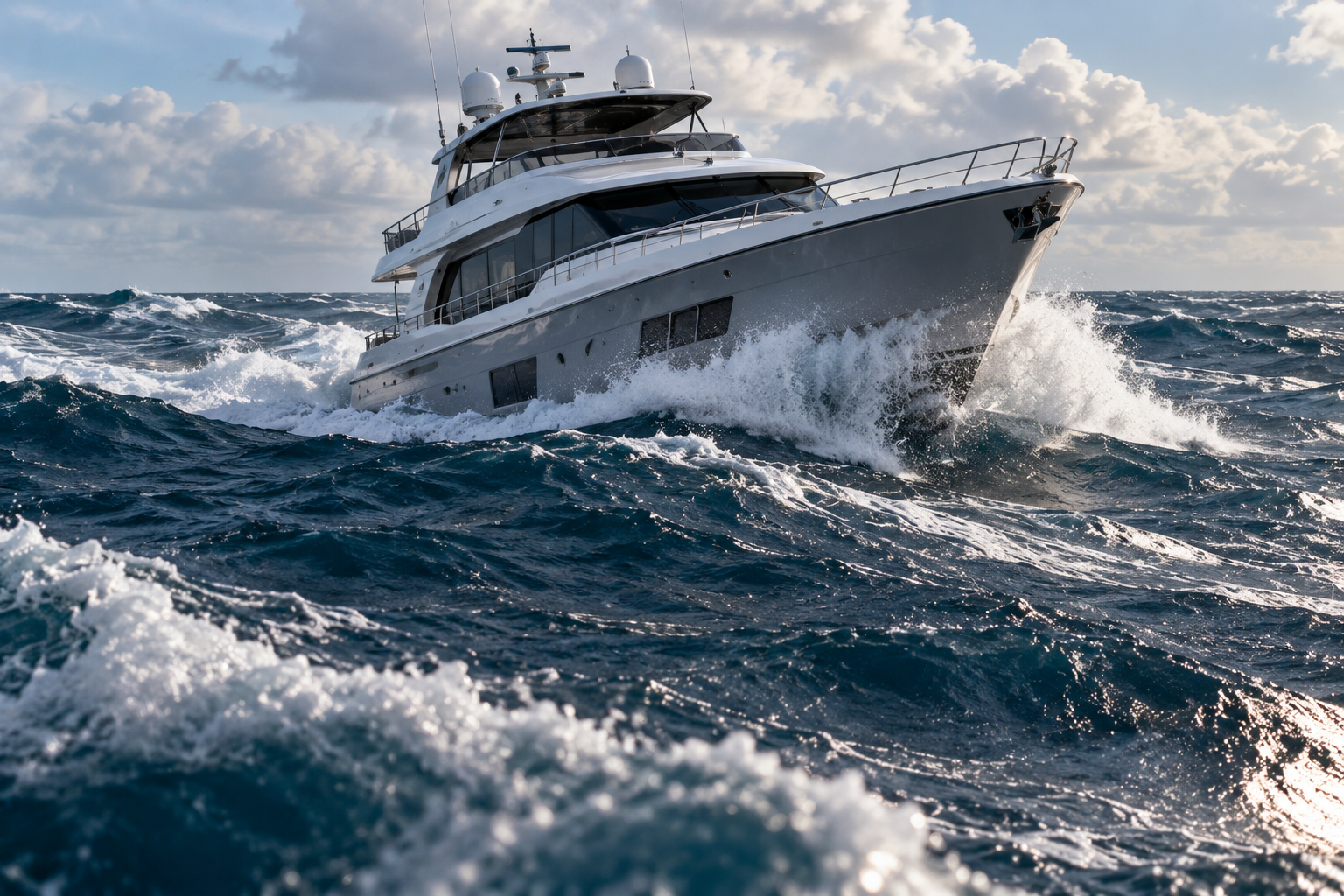
Yacht Stabilizers Decoded: Fins vs Gyros, Real Costs, and When They Truly Pay Off
Stabilizers have moved from “nice upgrade” to “expected equipment” on many late‑model motor yachts in Southwest Florida and Bahamas cruising. But not every owner needs them, and not every system fits every boat or cruising plan.
For Cape Coral, Fort Myers, Naples, Marco Island, Punta Gorda, and Bahamas‑bound owners, the real questions are practical:
- Do I actually need stabilizers for how I use the boat?
- Should I favor fins or a gyro?
- What will they really cost to own and maintain?
- How will they affect a survey, resale value, and buyer confidence?
At Norwood & Skiff Yacht Group, we look at stabilizers the same way we look at engines, pods, or thrusters: as machinery that needs to be understood, budgeted, and evaluated—not just a checkbox on a listing.
What Stabilizers Actually Do (And When They Matter)
Stabilizers reduce roll—the side‑to‑side motion that causes fatigue and seasickness. They do not flatten every sea. They are most valuable:
- In beam or quartering seas in the Gulf of Mexico
- Crossing from Marco or Naples to the Keys or Dry Tortugas
- Running from the Gulf side of Florida toward the Bahamas
- Sitting on the hook off Sanibel, Captiva, Cayo Costa, or in the Exumas
If your “cruising” is mostly protected canal runs in Cape Coral, short hops to Sanibel on flat mornings, and dockside entertaining, stabilizers may be a convenience rather than a must‑have. If you or your family get seasick, or you plan serious coastal cruising or Bahamas crossings, stabilization often moves into the “non‑negotiable” column.
Fins vs Gyros: How They Work, In Plain English
Fin Stabilizers
Fin systems use underwater fins mounted to the hull, driven by hydraulics or electrics, controlled by a gyro sensor.
Strengths:
- Very effective underway in most sea states
- Can be effective at anchor with modern “zero‑speed” systems
- Common on 45–100+ ft cruising motor yachts
- Strong positive perception among experienced buyers
Limitations:
- Less effective at very low speeds without zero‑speed design
- Fins add drag and vulnerability to grounding or debris
- Require hull penetrations, hydraulic systems, and periodic haul‑out service
In Southwest Florida, fin size and position also matter for draft and canal access in Cape Coral, Punta Gorda, and Marco Island. Poorly planned fin placement can limit haul‑out options and increase risk in shallow areas like Matlacha Pass or Charlotte Harbor backwaters.
Gyro Stabilizers
Gyro systems use a heavy spinning flywheel inside the boat. When the yacht rolls, the gyro’s precession creates an opposing force.
Strengths:
- All equipment inside the hull—no underwater appendages
- Particularly appealing on center consoles and smaller motor yachts
- Strong performance at anchor and in low‑speed operation
- No added underwater draft
Limitations:
- Significant power demand (especially at start‑up)
- Heat management and ventilation are critical
- Performance dependent on proper sizing and installation
- Periodic major service or rebuilds as hours accumulate
Gyros are popular on later‑model 35–60 ft boats marketed for “family comfort” and day boating, including many Bahamas and Keys‑oriented builds.
Maintenance Realities: What Owners Actually Live With
Stabilizers are not “install and forget” systems. A proper survey should evaluate them as carefully as engines or generators.
Fin Stabilizer Maintenance
Typical ownership expectations:
- Hydraulic system: periodic oil changes, filter changes, hose and fitting inspection
- Actuators and seals: scheduled seal replacement to prevent leaks into the hull
- Control systems: software updates, sensor calibration, troubleshooting when alarms appear
- Haul‑outs: some maintenance requires the boat out of the water
Neglected fins can show up in surveys as:
- Leaking seals or wet bilges around actuator pockets
- Sluggish or noisy operation underway
- Error codes or inoperative systems during sea trial
A well‑maintained fin system with documented service is a net positive; a neglected system becomes a negotiation point and can reduce buyer confidence.
Gyro Stabilizer Maintenance
Typical ownership expectations:
- Annual or hour‑based service (manufacturer‑specific)
- Active cooling: seawater or forced‑air cooling systems maintained and monitored
- Mounting and structure: periodic checks for foundation integrity and fastener issues
- Major overhauls: scheduled rebuilds at defined hour intervals
On survey, common gyro issues include:
- Overdue or undocumented service
- Excessive vibration, noise, or longer spin‑up/spin‑down times
- High engine room temperatures or poor ventilation
Again, service records matter. A gyro with factory‑recorded maintenance is attractive; one with no paperwork often leads buyers to assume a looming rebuild bill.
Power Demands and System Integration
Both fins and gyros demand thoughtful electrical and power planning.
- Hydraulic fins typically rely on engine‑driven hydraulic pumps or PTOs from generators. Extended stabilization at anchor often implies generator hours and associated fuel, service, and noise.
- Electric fins and gyros draw substantial current, especially at start‑up. Undersized generators or marginal shore power can become an issue.
In Southwest Florida’s heat, remember:
- Increased generator use means more heat load and potential A/C challenges
- Additional systems mean more load on already busy service yards in peak season
- Storm planning must account for securing and protecting the system before hurricanes
This is where a captain‑broker or technically experienced yacht broker earns their keep—matching your cruising plan and typical load profile with realistic power demands, not just reading the brochure.
What to Expect at Survey and Sea Trial
On a proper pre‑purchase survey and sea trial, stabilization should be evaluated as its own line item:
- Mechanical inspection of actuators, hydraulic systems, or gyro foundations
- Operational testing at rest, displacement speeds, and cruise speeds
- Control and safety checks: alarms, shutdowns, backup modes
- Sea conditions reality check: how the system behaves in the actual Gulf or coastal chop that you plan to run
Survey findings on stabilizers often influence:
- Offer adjustments or credits for overdue maintenance
- Requirements for seller‑completed repairs before closing
- Decisions to proceed—or to walk away—if structural or major system risks are identified
Your buyer’s broker should help interpret whether a “stabilizer issue” is a minor service item or a material risk affecting value and safety.
When Stabilizers Actually Pay Back
Stabilizers can “pay back” in several ways, depending on how you use the yacht.
1. Comfort and Usability
If stabilizers make the difference between your family enjoying a five‑day Bahamas trip versus wanting to go home after day one, the value is personal and immediate. Gulf and Bahamas cruisers who actually use their boats in a wide range of conditions usually consider stabilization a requirement, not a luxury.
2. Resale Appeal and Marketability
In the current Florida and Bahamas‑focused market:
- On later‑model 45–80 ft motor yachts, buyers increasingly expect stabilization
- A similar yacht without stabilization may sell, but often to a narrower audience
- Clean service history and properly functioning stabilization can shorten time on market and strengthen buyer confidence
On survey, a functional, well‑documented stabilizer system is a positive signal: the owner invested in comfort and ongoing maintenance.
3. Risk‑Adjusted Value
The right way to think about stabilization is risk‑adjusted value:
- If stabilizers support the way you actually intend to use the boat—Gulf crossings, Bahamas, offshore legs—they reduce the risk of unused ownership, seasick guests, and aborted trips.
- If you are primarily a canal cruiser or short‑hop day boater, the same system adds cost and complexity without equal benefit.
Sometimes, the right advice is to buy the better‑maintained yacht without stabilizers instead of the deferred‑maintenance yacht with them. A newer system on a poorly maintained boat is not automatically the better purchase.
Add‑On vs Must‑Have: How to Decide
For Southwest Florida owners, we typically ask:
- Will you routinely run the Gulf outside of “perfect” weather windows?
- Are you Bahamas‑ or Great Loop‑oriented?
- Do you have family members prone to seasickness?
- Are you willing to budget realistically for stabilizer service and power demand?
- Are local yards comfortable servicing your specific brand of system?
If the answers skew toward active coastal cruising and family sensitivity, stabilization trends toward must‑have. If your boating is primarily local, fair‑weather, protected‑water use, it’s a nice‑to‑have feature that can help resale but isn’t essential.
Talk Through Stabilization With a Broker Who’s Run the Boats
Stabilizers are just one piece of the larger “right yacht for the way you actually use it” conversation. The goal is not to check every option box—it’s to balance comfort, complexity, cost, and resale with how and where you run.
If you’re considering a stabilized yacht in Cape Coral, Fort Myers, Naples, Marco Island, Punta Gorda, or planning Bahamas or Great Loop cruising, our captain‑brokers at Norwood & Skiff Yacht Group can walk you through:
- Whether stabilizers fit your specific use case
- How to interpret stabilizer survey findings and service history
- When to pay up for a boat with stabilization—and when to walk away
Contact Norwood & Skiff today to discuss your next yacht with someone who evaluates the machinery, not just the marketing.