We can't find the internet
Attempting to reconnect
Something went wrong!
Hang in there while we get back on track

Experienced Boaters
Make Better Brokers.
Call us today and see for yourself.


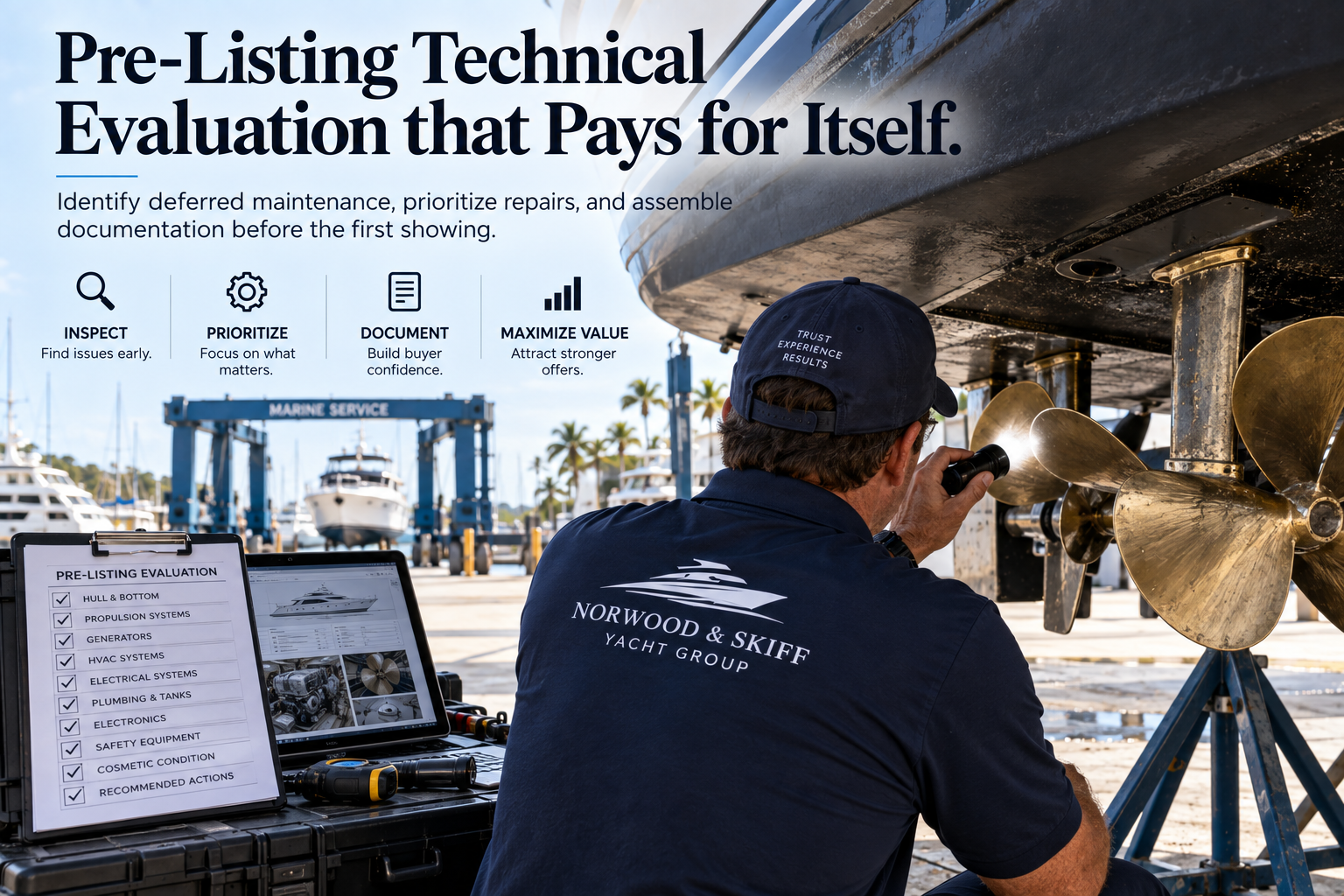
Pre‑Listing Technical Evaluation That Pays For Itself
When you decide to sell your yacht, the real work starts long before the first showing or online inquiry. In today’s market, serious buyers expect more than glossy photos and a clean cockpit. They want evidence: condition, maintenance history, realistic valuation, and a survey and sea trial that confirm what they were told.
A structured pre‑listing technical evaluation—the kind a captain‑broker would perform—can:
- Uncover deferred maintenance before a buyer’s surveyor does
- Allow you to prioritize repairs and upgrades with a clear return on investment
- Reduce survey‑day surprises and renegotiation
- Support a stronger asking price, backed by market evidence and condition
For motivated sellers in Southwest Florida, this is often the difference between a smooth, full‑value sale and a painful price reduction when you’re already emotionally committed to a deal.
What Is a Pre‑Listing Technical Evaluation?
Think of it as a buyer’s survey you control—completed before you ever go to market.
Instead of waiting for a buyer’s surveyor to find problems at the eleventh hour, an experienced captain‑broker or technical professional walks the boat as if they were representing a demanding buyer:
- Reviewing mechanical, electrical, and plumbing systems
- Checking cosmetics and corrosion with a critical eye
- Looking for safety and regulatory issues
- Reviewing documented maintenance and service history
- Comparing your yacht to comparable sales and competing inventory
The goal is not to “pretty up the listing.” The goal is to understand, in realistic detail, what a qualified buyer and their surveyor are likely to find—and to address those issues on your terms and timeline.
Why Serious Sellers Should Go Technical Before Listing
1. Deferred Maintenance Will Be Found—The Question Is When
In Southwest Florida, heat, humidity, and saltwater expose deferred maintenance quickly:
- Air conditioning that struggles in August will be obvious on a sea trial
- Corroded clamps, hoses, and seacocks stand out in a hot, tight engine room
- Sun‑damaged soft goods and crazed isinglass are immediate red flags
- Bottom paint, running gear, and through‑hulls reveal growth and neglect
If these items surface for the first time in a buyer’s survey report, you lose leverage. By handling them pre‑listing, you decide:
- What must be fixed
- What can reasonably be disclosed but left as‑is
- How those choices affect your asking price and negotiation strategy
2. Fewer Surprises Means Less Survey Renegotiation
Survey renegotiation is where many deals lose five or six figures of value.
A thoughtful pre‑listing evaluation:
- Anticipates “survey findings” in advance
- Lets you correct what a reasonable buyer would expect to be addressed
- Arms your broker with documentation and invoices to rebut exaggerated repair estimates
When the buyer’s survey arrives, there are fewer unknowns and fewer excuses to reopen the deal from scratch.
What a Captain‑Broker Looks for Before Listing
A captain‑broker doesn’t just look for shiny surfaces. They focus on how the yacht operates, what it will cost to own, and what a surveyor will report.
Key areas include:
Engines, Drives, and Generators
- Engine hours versus age and expected duty cycle
- Evidence of regular oil changes, cooling system service, valve adjustments, and aftercooler work
- Pod drives, bow/stern thrusters, and stabilizers: leaks, error codes, service history
- Generator load testing and service records
A well‑maintained mechanical package with documented history can justify a stronger asking price than a newer yacht with thin records.
Electrical and Systems
- Battery age, charging systems, shore‑power configuration, and load management
- Inverters, chargers, and major 12V/24V circuits
- Air conditioning performance under Florida summer conditions
- Watermakers, davits, windlasses, and other high‑value systems
Buyers of 36–116 foot yachts expect these systems to work—and they pay more for yachts where they demonstrably do.
Hull, Deck, and Exterior
- Bottom condition, paint age, and any signs of blistering or repairs
- Running gear, props, shafts, rudders, and trim tabs
- Gelcoat, non‑skid, windows, and deck hardware
- Canvas, soft goods, upholstery, and exterior cushions
In Cape Coral, Fort Myers, Naples, and surrounding markets, a buyer will often compare your yacht directly against several local options. Cosmetics are a fast tie‑breaker.
Interior and Habitability
- Odors (mold, fuel, holding tank) that signal hidden issues
- Galley equipment, refrigeration, and icemakers
- Heads, pumps, and sanitation systems
- Layout suitability for Great Loop, Bahamas cruising, or local island‑hopping
An experienced broker will evaluate whether your yacht matches how most Southwest Florida owners actually use their boats, and frame the listing accordingly.
Documentation: The Silent Value Driver
A strong pre‑listing package isn’t just about fixing things; it’s about proving what you’ve done.
Serious buyers and their lenders pay attention to:
- Documented maintenance: Scheduled services, invoices from reputable yards and mechanics, engine and generator records
- Upgrades and refits: Dates, equipment brands, and who performed the work
- Ownership costs: Insurance, dockage, and major recurring maintenance—especially for larger motor yachts
This documentation:
- Supports your asking price with evidence, not emotion
- Differentiates your yacht from “mystery history” listings
- Gives buyers confidence to move faster and negotiate less aggressively
A captain‑broker will help you organize records into a logical package that answers typical buyer and surveyor questions before they’re asked.
Prioritizing Repairs: What Actually Pays for Itself
Not every issue deserves to be fixed pre‑listing. The right broker helps you apply a return‑on‑investment mindset:
High‑priority, value‑supporting items often include:
- Safety and seaworthiness: Bilge pumps, seacocks, navigation lights, fire systems
- Major mechanical items that will alarm any surveyor: leaks, overheating, smoking, clear signs of neglect
- Basic habitability: Air conditioning, refrigeration, water pumps, heads
Lower‑priority items might reasonably be:
- Minor cosmetics that don’t affect function or perceived neglect
- Optional electronics upgrades when existing systems are functional
The point is not to deliver a “perfect” yacht; it’s to deliver a yacht that a serious buyer can purchase with confidence at a price supported by condition, records, and market evidence.
Why This Matters Even More in Southwest Florida
Our waters and infrastructure create unique suitability questions:
- Draft and air draft for Cape Coral and Fort Myers canals, Pine Island, and Charlotte Harbor
- Bridge clearances, turning room, and dockage options for larger yachts
- Exposure to Florida heat, hurricanes, and salt: how that has been managed over time
A local, technically grounded broker understands how these factors influence which buyers are right for your yacht—and what they’ll scrutinize in a survey.
The Bottom Line: A Better‑Managed, Higher‑Confidence Sale
A pre‑listing technical evaluation is not an extra cost; it is part of controlling your sale:
- You learn what the boat really is—not what you hope it is
- You choose which issues to correct and how to price the yacht accordingly
- You enter negotiations with fewer surprises and stronger justification for your number
- You give qualified buyers a reason to pick your yacht over similar “unknowns”
At Norwood & Skiff Yacht Group, our captain‑broker approach is built around this kind of groundwork. We combine operating experience, technical judgment, and market evidence to help sellers prepare their yachts properly—so the hard part of brokerage is handled before it becomes a problem.
If you’re considering selling a yacht in Cape Coral, Fort Myers, Naples, Marco Island, Punta Gorda, or nearby markets, contact Norwood & Skiff to schedule a pre‑listing technical review and discuss how to position your yacht for a cleaner, more confident sale.